GMP News, GMP guidelines, GMP Violations, GMP warnings A Public Health Global News Portal

Welcome to www.seekgmp.com FDA, WHO, EU, TGA, CDSCO guidelines...and GMP Violations news/warning letters..

150000+ Industry Leaders already read it everyday

  • This is default featured slide 1 title

    Go to Blogger edit html and find these sentences.Now replace these sentences with your own descriptions.This theme is Bloggerized by Lasantha Bandara - Premiumbloggertemplates.com.

  • GMP Trends, Quality Tools

    Go to Blogger edit html and find these sentences.Now replace these sentences with your own descriptions.This theme is Bloggerized by Lasantha Bandara - Premiumbloggertemplates.com.

  • GMP News drifts on Market and economy

    Go to Blogger edit html and find these sentences.Now replace these sentences with your own descriptions.This theme is Bloggerized by Lasantha Bandara - Premiumbloggertemplates.com.

  • This is default featured slide 4 title

    Go to Blogger edit html and find these sentences.Now replace these sentences with your own descriptions.This theme is Bloggerized by Lasantha Bandara - Premiumbloggertemplates.com.

  • What to Ask Your Doctor Before Taking Opioids

    Every patient should ask questions when getting a new prescription. This is especially important when your doctor, dentist or other health care professional prescribes you an opioid, such as hydrocodone, oxycodone, codeine and morphine. What should you ask?

Showing posts with label Articles. Show all posts

Monday, March 13, 2017

What are the APS PROCESS SIMULATION TEST CONDITIONS ?


PROCESS SIMULATION TEST CONDITIONS

1.     Test Performance
1.1 The process simulation test should follow as closely as possible the routine aseptic manufacturing process and include all critical subsequent manufacturing steps. All equipment should remain the same wherever practicable as for the routine process. Appropriate combinations of container size and opening as well as speed of the processing line should be used (preferably at the extremes).
Share:

Monday, January 30, 2017

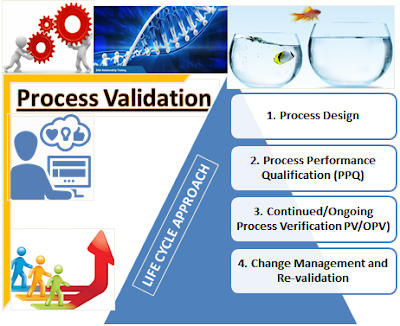
Life cycle Approach to Process Validation” -Current Regulatory perspective & It’s Benefits

“Life cycle Approach to Process Validation” Part-1.


“Quality has to be built-in into the process and cannot be relied on the testing of final product”

Definition of Process validation:

“The collection and evaluation of data, from the process design stage through commercial production, which establishes scientific evidence that a process is capable of consistently delivering quality product.”
Share:

Monday, January 23, 2017

The Top 5 Reasons Companies Ignore Root Cause Analysis by Christian Green at gmpviolations


Anyone who works in manufacturing understands the importance of effective root cause analysis (RCA), but very few organizations invest appropriately in this skillset. There are a number of reasons, or rather excuses that we can identify that contribute to this situation
There always seems to be time to do the same job over and over
again, but no time to make sure it is done right the first time.


1.      “We just don’t have the time for RCA”
This is a common excuse in the manufacturing environment where fire fighting has become the normal way of doing things. Specialists spend their time running from one incident to the next, applying quick fixes to remove the symptoms before rushing on to the next problem.
In this environment, chances are that every member of the team is spending a good portion of the day addressing issues that could be eliminated if an underlying chronic condition within the infrastructure were resolved. There always seems to be time to do the same job over and over again, but no time to make sure it is done right the first time by eliminating the actual cause of the problem.
Statistics for repeat incidents build a compelling case for the time and cost savings of a good RCA capability within an organisation.

2.      The “Blame Culture”
It is inevitable that root cause analysis will uncover problems in your infrastructure that are the direct result of something incorrectly done—or not done—in the first instance. When there is a culture of finger pointing and blaming others, people may be reluctant to be involved in root cause analysis efforts for fear of being blamed for creating an error.
This can be avoided by concentrating on the process and not the people involved. It is also important to put ground rules in place to stop the process from turning into a witch-hunt. If people are concerned about being blamed, they are likely to withhold crucial information and slow down or even prevent the identification of the root cause.

3.      A Lack of Organizational Will
When complex problems are difficult to resolve, management commitment and support is required. This involves access to information, freeing up of resources, and having an open mind to solutions. Without management support for tackling big issues, the teams involved in root cause analysis will be pulled in other directions, are likely to become frustrated, and will, in all likelihood, not commit to the task of finding cause. Management must take the lead and assure team members of that they are committed to finding true cause.

4.      Lack of Skills, Knowledge and Experience in RCA
Effective root cause analysis requires a set of skills that may be lacking in the organization. Without a specific RCA skillset, a specialized team will struggle to find the root cause. It is likely to take longer, cost more, and be far less efficient than it would be if the appropriate training had been provided. Training and coaching in learning and applying RCA techniques removes this barrier and ensures that time spent in problem solving is effective and provides the results that are needed.

5.      Lack of Detail and Missing Data
When an organization is in fire-fighting mode, the information collected is often hurried and incomplete. It may be missing key facts that will aid in RCA. All too often, incident and problem data that is collected lacks the depth of information needed for a thorough assessment of the situation. When support teams jump to solutions without systematically collecting and analyzing the data, and if the selected solution eases the situation, little additional information will be collected. This leaves the problem-solving teams starting from scratch to investigate problems when many of the original details have been forgotten and never recorded. This makes RCA much more involved and difficult, bringing you back to the first point of not having enough time! It is a “chicken and egg” situation. Standardized collection of information by support staff will improve the success rate of your RCA initiatives.

An initial investment in training teams to use RCA, integrating the use of RCA processes, and removing some of the barriers to using RCA that are likely to exist in the organization, can pay big dividends in the long term. There will be some short-term pain in transitioning to effective root cause analysis as an integral part of an organization’s capability. However, the value of RCA will become evident as problems are efficiently and permanently resolved, and RCA becomes an integral part of operational activities.


Author: Christian Green
Critical Thinking Facilitator leading clients across industries to complex issue resolution:


www.gmpviolations.com
GMP News, GMP guidelines, GMP Violations, GMP warnings, GMP Trends. A Public Health Global News Portal (This story has not been edited by GMP Violations staff and is auto-generated from a syndicated feed.) Disclaimer: The Logos/Images posted here are belongs to respective to Authority / owners of firm.
Share:

Sunday, January 22, 2017

Understanding CAPA by James Bullock, PMP, ASQ CMQ/OE, CSSGB


Understanding CAPA
Corrective Action Preventive Action or CAPA is utilized in continuous improvement to provide actions needed to correct, eliminate recurrence, and prevent poor quality. CAPA’s are changes connected with change control, risk management, and continuous improvement.
The difference between a corrective and preventive action can be misunderstood as well as the difference between a correction and a corrective action. The defined scope of CAPA provides further clarification:
  • A correction is an immediate one-time action to fix a non-conformity. This can be classified as rework or a repair having little risk or impact which is typically completed informally.
  • A corrective action is an action taken to eliminate or reduce the cause and recurrence of a nonconformity or other undesirable event which poses greater risk and is formally completed (there is action taken after there is a failure).
  • Preventive actions eliminate or reduce a nonconformity or undesirable event by averting their occurrence (A failed event has not occurred yet, but there are actions taken to stop a failure or nonconformity from happening). Preventive action(s) can result from an effective corrective action or through continuous risk identification during any stage where changes are made as applicable to processes, systems, etc., to eliminate, avoid, or reduce the occurrence of issues leading to poor quality.
As a CAPA system collects information and develops, it should advance from less corrective to more preventive actions. It is good practice to standardize preventive actions as applicable across other processes, procedures, and systems resulting from corrective actions and risk management. In the long haul, preventing the right risks instead of correcting issues as they occur saves more time, money, and customer relationships as there is less rework. CAPA systems are effective when they are perceived and utilized as a proactive system rather than a reactive one. A risk-based approach emphasizes effective planning and risk management for providing important monitoring, control, and action to identify, evaluate, and prioritize the most critical issues in preventing them. As more data becomes available, it is more important to evaluate and improve the risk management system for it to continue to be effective and reliable.  
CAPAs are an integral part of change, continuous improvement, and risk management. Changes are evaluated and prioritized based on risk, are implemented once tested and approved, and monitored for effectiveness. If additional improvements are identified, then the process starts over which is consistent with the Plan, Do, Check/Study, Act continuous improvement cycle. CAPAs need to be uniquely identifiable to ensure traceability and easy retrieval for audits, research, and their management. It is necessary to classify actions as corrective or preventive to make comparisons between prevention versus correction and to evaluate how the system is utilized. This can provide valuable feedback to determine if the system is used proactively or reactively.
An effective CAPA system sufficiently investigates and identifies true root causes, implements corrective actions for the root causes, utilizes preventive actions to improve and standardize where applicable, properly implements and monitors actions/changes for effectiveness, and provides transparency for completion of all steps. They should not only be applied to products but also processes and systems as well. They are systems that rely on internal and external feedback. If internal and external systems are not integrated adequately and standardized to communicate information consistently, then the system can become less effective. 


Author: James Bullock, PMP, ASQ CMQ/OE, CSSGB

www.gmpviolations.com GMP News, GMP guidelines, GMP Violations, GMP warnings, GMP Trends. A Public Health Global News Portal (This story has not been edited by GMP Violations staff and is auto-generated from a syndicated feed.) Disclaimer: The Logos/Images posted here are belongs to respective to Authority / owners of firm.
Share:
Related Posts Plugin for WordPress, Blogger...

Popular Posts

Related Posts Plugin for WordPress, Blogger...

Subscribe Free GMP Guidelines

Enter your email address:

Delivered by FeedBurner

Followers

Printfriendly

Subscribe via email for free

Services

Enter your email address:

Delivered by FeedBurner

Contact Form

Name

Email *

Message *

Menu :
Powered by Blogger.

Visitors

    Translater

    Category

    2016 (37) 2017 (85) 2018 (10) 211 CFR (2) 211.63 (1) 21cfr (1) 483 (5) AAFA (1) Abbott (2) AboutUs (1) ALCOA (1) Alerts (2) ANDA (1) Anshu (2) Antibiotics (1) apic (1) APR17 (8) APS (2) Articles (4) AstraZeneca (1) Aug17 (2) Aurobindo (2) Author (2) Authors (8) Biocon (1) cadila (1) capa (3) CDSCO (5) Change control (1) Christian Green (1) cipla (2) Cleaning validation (1) Data Integrity (9) dec16 (15) Definations (1) Deviations (1) Donald Trump’s (2) Downloads (17) Dr.Reddy's (4) eca (1) EIR (1) Eli Lilly (1) ema (12) EU (9) FDA (73) FDA Guide (20) FEB17 (15) Genaral (1) General Health (2) GMP (1) GMP News (36) gsk (2) GuidelineEU (10) GuidelinesG (5) GuidelineW (2) GV/0117/001 (1) GVAuthors (3) Health (4) HOSPIRA (1) ICH (3) ICHGuide (3) import alert (1) India (1) ISPE (1) James Bullock (1) JAN17 (23) Jul17 (8) July17 (1) Jun17 (4) Lupin (2) Mahender (40) MAR17 (13) Mar18 (7) May17 (10) May18 (1) MHRA (3) MHRA guide (1) Mumbai (1) Mylan (4) Natco (1) News (55) Non Complinaces (1) Nov16 (5) Novartis (1) oct (1) Oct16 (10) OCT17 (1) PDA (1) Personnel (1) pfizer (1) pics (8) Picsguide (2) QbD (1) Quality Docs (1) RCA (1) Recall (1) safety (1) Sanjeev Kumar Singh (4) Sanofi (1) Sep16 (6) Siegfried Schmitt (2) SUN (1) TGA (3) TOP 10 PHARMA (1) USP (2) Validation (3) Warning Letters (44) WHO (6) zika (1)

    Sponsors

    Theme Support